GSA Services
 Advantage!
|
|
GSA Services |
Advantage!
|
| Contract Background | Major Project Areas | Key Personnel | Services | GSA Rates | Labor Categories | TERMS AND CONDITIONS | Contact ESG |
ECOLOGICAL SOLUTIONS GROUP LLC ECOLOGICAL SOLUTIONS GROUP LLC Ecological Solutions Group LLC (ESG) helps the owners of large-scale lands, including the United States (U.S.) federal government, understand and manage their wetlands, rangelands, forests and streams. We analyze the condition of vegetation, soils, water and wildlife on client holdings. We then develop protocols to guide site-appropriate management activities, and work with clients to apply these techniques for the benefit of their properties. Our consulting practice currently covers 13 states and 2 provinces in the western United States and Canada. Our clients include government agencies, corporations, tribal entities and private landowners. We are therefore pleased to offer our environmental planning services (SINs 541620 and OLM) through the GSA Schedule for Environmental Services under contract GS-10F-0002V. Company Information ESG’s partners are Dr. Paul Hansen, Mr. Bill Thompson, and Mr. Tom Keith, The partners first began their association at The University of Montana’s Riparian and Wetlands Research Program (RWRP), where Dr. Hansen served as Director from 1986 to 2001, from which Mr. Bill Thompson earned his advanced degrees, and Mr. Tom Keith served as Information Systems Specialist. At the RWRP, the team developed its expertise in environmental inventories of large land areas, and in ecological data management. In 2001, the team moved out of academia and into the private sector, associating with an environmental restoration firm in Montana, Bitterroot Restoration, Inc. (BRI). In spring 2006, the scientists decided to establish their own firm, concentrating on ecological assessment, environmental planning, and natural resource consulting. Together, the 3 partners bring to bear over 90 years experience of on-the-ground environmental consulting experience in botany, soils, hydrology, environmental sampling, ecology, wildlife biology, range science, planning, and data management. As shown in Figure 1, ESG has worked throughout the Western United States and Canada.
Key: APPLICATIONS ESG’s services are utilized by individuals and organizations that require a technical insight into the environmental status of the resources that they own or manage, as well as assistance in the practices by which that resource is managed. The heart of ESG’s technical offerings involves site assessment, a process in which a trained scientist visits a site and compiles a report of an area’s environmental condition, including:
The collection of this data allows a manager to understand the environmental condition of the resource for which they are responsible. ESG’s scientists then can work with the manager to improve the administration of the resource and/or to plan and develop mitigation, remediation or restoration strategies to either address environmental impacts or to return the resource to its proper functioning condition. ESG’s members have worked on project sites ranging from the boreal forests of Canada to the chaparral of southern California, and from the estuaries of the Pacific Coast to the prairies of the Midwest. The wide variety of projects in which ESG’s members have been involved show a clear understanding of plants, soils, water and environmental disturbances, as well as the ability to develop and apply solutions to complex ecological problems. For simplicity, however, ESG’s major project areas have been divided into the five, interrelated categories, which are described below. Riparian/Wetlands Work
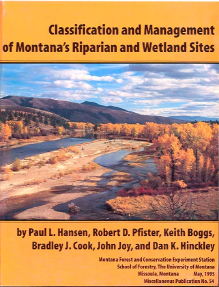
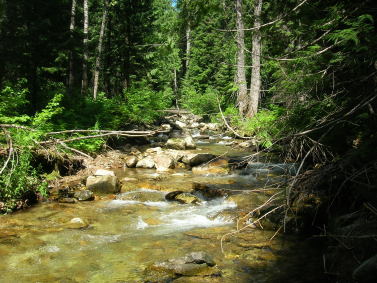
The core of this effort involves seven environmental survey methods developed by the ESG team for the inventory and assessment of the environmental conditions of riparian and wetland ecosystems. These survey methods include: 1) lotic (flowing water) inventory (detailed inventory), The health assessments consider at the basic condition of soils, vegetation, geology, and hydrology of a particular site. The inventories include a more detailed consideration of these factors, plus a thorough botanical census and an assessment of management practices, wildlife presence and other environmental factors. These seven procedures have been taught to over 12,000 people including over 150 federal, state, provincial, and non-government agencies/organizations in western North America. Based on this work, classification and management documents have been developed that cover over 577,500 square miles in western North Dakota, western South Dakota, all of Montana, eastern and southern Idaho, the southern half of Saskatchewan, and all of Alberta. Additionally, this work has lead to advances in bioengineering and other “soft” methods of stream stabilization, the development of innovative treatment wetlands, the furtherance of national TMDL (Total Maximum Daily Load) initiatives, the study of the spread and control of whirling disease, and the refinement of techniques for the establishment of native wetlands. ESG’s riparian and wetlands efforts underscore its ability to assess, understand and develop management and restoration guidelines for large-scale, complex and valuable environmental resources. Uplands Assessment and Restoration
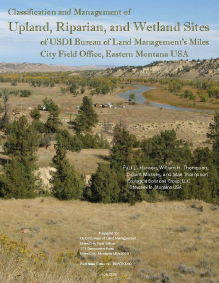
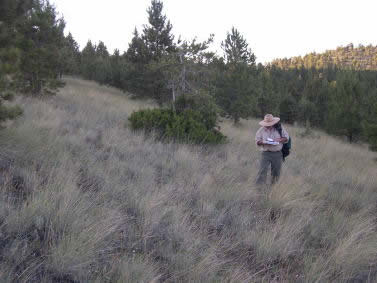
ESG has also conducted a variety of dry land environmental project in supported of the oil and natural gas industry. ESG’s members have overseen site restoration on a 65-mile long gas pipeline in the Mojave Desert, have developed restoration plans for gas well closures on critical grizzly bear habitat on the Rocky Mountain Front, and developed protocols for the cleanup and restoration of desert habitats contaminated by oil spills during wartime. Other upland work has included an inventory of forest and woodland resources on lands within the Fort Peck Reservation and the writing of a woodland resource management plan for the Fort Peck Tribes, Assiniboine and Sioux. This project included the collection of stand data on forested types, including productivity, utilization, and regeneration success. ESG has also recently completed an assessment of upland mule deer habitat in the Bear Paw Mountains in north-central Montana and on Big Sheep Mountain in eastern Montana. The study tested methodology developed by Montana Fish, Wildlife and Park (MT FWP) scientists to rapidly assess large areas to detect trends in browse species availability and conditions with respect to ungulate populations, human land usage patterns, and other site conditions. The work complements a parallel project by ESG to assess moose habitat in the mountains of west-central Montana. Additionally, ESG is under contract to MT FWP to conduct a variety of baseline environmental inventories for conservation easement enforcement on ranches across the state of Montana. To date, ESG has conducted baseline environmental inventories on 15,596 acres of forest, wetlands and rangelands. ESG members have completed upland fieldwork in the Rocky Mountains, Great Plains, the Mojave Desert, the Great Basin, the Colorado plateau, and California’s coastal sage scrub and chaparral communities. Project activities represent ESG’s central stock in trade: assessment of existing ecological conditions, analysis of environmental disturbances, sampling for environmental contaminants, development of restoration activities and management plans, and oversight of implementation, maintenance and monitoring. These projects underscore the ability of ESG’s members to not only successfully understand the ecology of a wide variety of habitats, but also to develop and apply workable solutions to difficult ecological problems located in harsh environments. The core of this effort involves environmental survey methods developed by the ESG team for the inventory and assessment of the environmental conditions of upland ecosystems. These survey methods include: 1) upland (flowing water) inventory (detailed inventory),
Clark Fork River Operable Unit
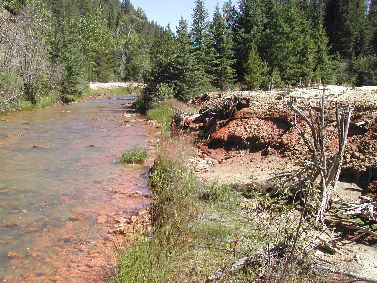
In 1988, members of ESG were first brought in to help develop an understanding of the scope and intensity of the environmental problems. Since then, members of ESG have contributed to every phase of the Superfund process, including: the Ecological Risk Assessment; the Remedial Investigation/Feasibility Study; the Record of Decision; and the Remedial Design. This work has involved a variety of vegetation inventory efforts throughout the entire 120-mile drainage, soil sampling and analysis of the entire floodplain; a variety of hydrologic surveys; the design and implementation of streambank stabilization and riparian zone phytomediation projects; and experimentation regarding native plant tolerance of acute conditions of acidity and trace element loading. This work has lead to the development of plans for the cleanup of the CFR including: streambank stabilization techniques; floodplain restoration practices; grazing, irrigation and weed control protocols; and long-term operations and management plans. ESG’s CFR work underscores its members’ abilities not only to understand and integrate studies of water, soils, plants and environmental pollutants, but also to apply theses skills to solve large-scale, politicized, big-budget ecological problems. Other Superfund Work ESG’s work on the CFR has blossomed into a variety of similar initiatives entailing the assessment of and restoration planning for Superfund sites impacted by mining activities.
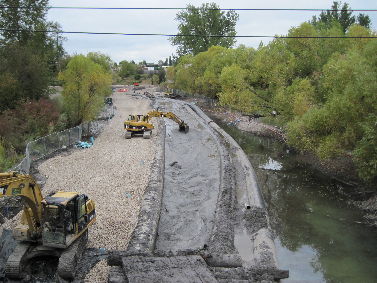
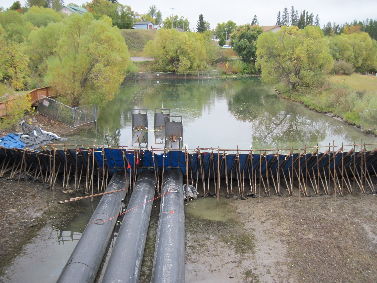
Together, these projects underscore ESG members’ abilities to assess and develop plans for Superfund sites impacted by mining activities. In addition, however, these initiatives demonstrate ESG’s ability to work successfully on projects in a variety of Western habitats that have been impacted by similar, but site-specific environmental problems. Mined Lands Assessment and Restoration ESG’s work on the Superfund sites impacted by mining activities has also found an application on a variety of private sector projects. While most of their work has been of a proprietary and confidential nature, it can be stated that members of ESG have been involved in mined-site assessment and restoration planning in Arizona, California, Colorado and Nevada, as well as Idaho, Montana and South Dakota. Their work has involved both hard rock and coal mines. Typical problems have included trace element toxicity, lack of soil nutrients and organic materials, and harsh climatic conditions endemic to the arid West. Projects have involved the development of soil prescriptions, planting palettes and protocols, treatment wetlands, permitting and costing. In addition, Dr. Massey served as Program Manager and Project Manager for the USACE’s Restoration of Abandoned Mine Site (RAMS) program. RAMS projects included Phase 1 abandoned mine site assessments in Idaho and Montana, as well as the planning and construction of a treatment wetland pilot project for acidic mine waste in headwaters of the drinking source for Helena, MT, the state capital. These projects demonstrate the ability of ESG’s members both to work for the private sector, as well as to address environmental issues on climatically challenging, heavily disturbed sites. EPA Emergency Response Assistance ESG has assisted EPA’s Region 8 Emergency Response Service Center, Ecosystems Protection and Remediation Branch, on a time-critical removal action for the Whitefish River Diesel Spill along the Whitefish River in Whitefish, MT. This is a non-NPL site under the incident category of an oil spill into navigable waters of the United States. On July 30, 2009, Region 8 of the EPA issued a Field Administrative Order (AO) to Burlington Northern Santa Fe (BNSF) under Section 311(c) of the Clean Water Act (CWA) requiring BNSF to remove the petroleum-contaminated sediment in the Whitefish River area. ESG is providing technical assistance in the design, planning, permitting (local, state, and federal entities), and oversight of the cleanup and subsequent restoration of the river bed and banks (Photos 7 and 8).
Botanical Inventory and Survey Identifying Plant Species of Concern (e.g., T & E, Rare, or Other Categories of Special Interest) ESG provides land managers with information on plant species of concern occurring on their properties as the result of intensive surveys expressly designed to identify and locate such species, and from routine riparian/wetland site inventories, upland site inventories. Major projects ESG has recently conducted from which species of concern have been systematically identified and reported include:
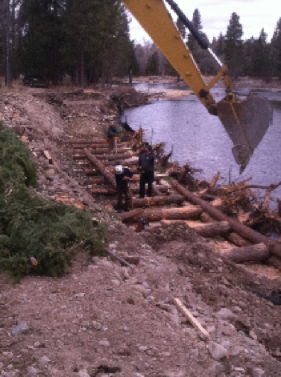
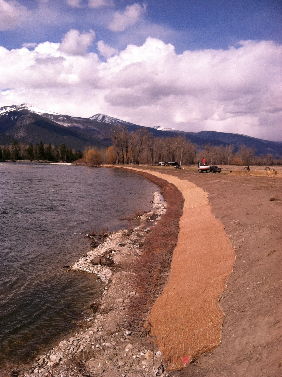
Bank and Shoreline Bio-Stabilization ESG has designed, permitted, and built more bio-stabilized (bio-engineered) bank and shoreline, on private land, in Montana than any other single known company. We have successfully installed over 21,000 feet of stabilization using bio-degradable materials and vegetation with much of the work being successfully accomplished on high volume - high energy riverine systems for a diverse range of clients.
Invasive Plant Species (Weeds) Management and Control ESG has extensive expertise and experience in assessing the extent of invasive plant problems, mapping infestations, and the planning and implementation of control treatments. Major projects involving various aspects of weed problem assessment, mapping, and treatment include:
Wildfire Casualty Timber Valuation ESG provides private forest landowners with an opportunity to take advantage of the IRS casualty loss provisions after catastrophic wildfire. In the event landowners are not able to salvage harvest merchantable timber an inventory can be completed and subsequent valuation. ESG’s team of core scientists, through whom it currently performs a majority of its work, is presented in Table 1. Given that its projects range across of most of Western North America, ESG also uses subcontractors, who are acquired through both professional and academic contacts, and through job services. Over the past two years, ESG has engaged subcontractors from Texas, California, Colorado, Montana and Oregon. ESG also maintains strong contacts with larger environmental and engineering firms that can bolster ESG’s technical skills as needed. Table 1. ESG’s Core Personnel
Site Remediation, Reclamation, Restoration, and Revegetation
Inventory, Assessment, Measurement, Monitoring, Mapping, and Planning
Management Planning and Technical Writing
Data Management, Analysis, and Reporting
Legal Support Services
Program and Project Management
Contract Period 10-1-2008 through 9-30-2023
LABOR CATEGORY JOB DESCRIPTIONS Senior Scientist Leads team in development of protocols for data collection and analysis, including provisions for quality assurance and quality control. Heads development and application of safety protocols. Leads scientific team in the collection, multivariate analysis and reporting of data. Serves as final technical editor and senior author of reports stemming from the environmental investigation. As a significant portion of duties, performs project management functions as required, such as budgeting, logistical planning, project accounting and cost reporting. Meets with the public, agency and client personnel. Serves as expert scientific witness and/or resource on legal matters. Requires advanced degree (Ph.D., P.E. or equivalent) in pertinent field and over 12 years relevant experience. Scientist II Leads team in development of protocols for data collection and analysis, including provisions for quality assurance and quality control. Leads team in the collection, multivariate analysis and reporting of data. Serves as final technical editor and senior author of reports stemming from the environmental investigation. As a significant portion of duties, performs project management functions as required, such as budgeting, logistical planning, project accounting and cost reporting. Meets with the public, agency and client personnel. Requires advanced degree (Master’s or equivalent) in pertinent field and over 8 years relevant experience. Scientist I Participates in development of protocols for data collection and analysis, including provisions for quality assurance and quality control. Assists in the collection, multivariate analysis and reporting of data. Serves as technical editor and author of reports stemming from the environmental investigation. As a minor portion of the position’s responsibilities, may perform project management functions as required, such as budgeting, logistical planning, project accounting and cost reporting. Scientist Technician III Requires college degree (Bachelors or equivalent) in pertinent field and over 2 years relevant experience. Two additional years experience may be substituted for a degree. Scientist Technician II Requires college degree (Bachelors or equivalent) and over 1 year of relevant experience. Two additional years experience may be substituted for a degree. Scientist Technician I Requires A.A. degree or two years of college in pertinent field, together with technical training within pertinent field. No years of experience are necessary. Data Management II Maintains and modifies complex systems or develops new subsystems such as an integrated production scheduling, inventory control, cost analysis, or sales analysis record in which every item of each type is automatically processed through the full system of records. Guides users in formulating requirements; advises on alternatives and on the implications of new or revised data processing systems; analyzes resulting user project proposals, identifies omissions and errors in requirements and conducts feasibility studies; recommends optimum approach and develops system design for approved projects. Interprets information and informally arbitrates between system users when conflicts exist. May serve as lead analyst in a design subgroup, directing and integrating the work of one or two lower level analysts, each responsible for several programs. Requires college degree (Bachelors or equivalent) in pertinent field and over 10 years relevant experience. Two additional years experience may be substituted for a degree. Data Management I Performs such duties as: develops, modifies, and maintains complex programs; designs and implements the interrelations of files and records within programs which will effectively fit into the overall design of the project; working with problems or concepts, develops programs for the solution to major scientific computational problems requiring the analysis and development of logical or mathematical descriptions of functions to be programmed; and develops occasional special programs, e.g., a critical path analysis program to assist in managing a special project. Tests, documents, and writes operating instructions for all work. Confers with other EDP personnel to secure information, investigate and resolve problems and coordinate work efforts. In addition, performs such programming analysis as: investigating the feasibility of alternate program design approaches to determine the best balanced solution, e.g., one that will best satisfy immediate user needs, facilitate subsequent modification, and conserve resources; on typical maintenance projects and smaller scale, limited new projects, assisting user personnel in defining problems or needs and determining work organization, the necessary files and records, and their interrelation with the program; or on large or more complicated projects, participating as a team member along with other EDP personnel and users and having responsibility for a portion of the project. Works independently under overall objectives and direction, apprising the supervisor about progress and unusual complications. Modifies and adapts precedent solutions and proven approaches. Guidelines include constraints imposed by the related programs with which the incumbent's programs must be meshed. Completed work is reviewed for timeliness, compatibility with other work, and effectiveness in meeting requirements. May function as team leader or supervise a few lower level programmers or technicians on assigned work. Requires college degree (Bachelors or equivalent) in pertinent field and over 5 years relevant experience. Two additional years experience may be substituted for a degree. Data Entry II Requires General Education Degree (GED) and over 2.5 years of relevant experience. Data Entry I Requires General Education Degree and 1 year of relevant experience. 1a. Special Item Numbers (SIN) Covered under this contractSIN 541620, Environmental Planning Services and DocumentationSIN OLM, Order-Level Materials 1b. Lowest Priced Model Number and Unit Price: Not Applicable1c: Hourly rates: For a description of all corresponding commercial job titles, experience, functional responsibility and education for those types of employees or subcontractors who will perform services please see the Labor Category Descriptions starting on page 12 of this document. 2. Maximum Order: $1,000,000.00 3. Minimum Order: $100.00 4.Geographic Coverage (delivery Area): Domestic and overseas 5. Point(s) of production (city, county, and state or foreign country): 115 W 3rd St, Ste 210, Stevensville, MT 59870 6. Discount from list prices or statement of net price: Government net prices (discounts not deducted). See Attachments. 7. Quantity discounts: None offered 8. Prompt payment Discount Term: Net 30 9a. Government commercial credit card is acceptable without any additional discounts. Yes 9b. Notification whether Government purchase cards are accepted or not accepted above micro-purchase threshold: Will Accept 10. Foreign items (list items by country of origin): None 11a. Time of Delivery (Contractor insert number of days): As specified on the Task order. 11b. Expedited Delivery: As specified on the Task order. 11c. Overnight and 2-day delivery: None. 11d. Urgent requirements: None 12. F.O.B. Point(s): Destination 13a. Ordering Address(es): 13b. Ordering procedures: For supplies and services, the ordering procedures, information on Blanket Purchase Agreements (BPA’s) are found in Federal Acquisition Regulation (FAR) 8.405-3. 14. Payment Address(es): 15. Warranty provision: Contractor’s standard commercial warranty 16. Export Packing Charges (if applicable): NA 17. Terms & Conditions of Government Purchase Card: Contact Contractor 18. T&C of Rental, Maintenance and Repairs: Not applicable 19. T&C of Installation: Not applicable 20. T&C of Repair Parts: Not applicable 21. List of service and distribution points Not applicable 22. List of Participating dealers: None 23. Preventive Maintenance: Not applicable 24. Special Attributes: Not applicable 25. DUNS number: 62-2980667 26. In System for Award Management (SAM) database: YesThe Service Contract Labor Standards, formerly the Service Contract Act (SCA) apply to this contract and it includes SCLS applicable labor categories. Labor categories and fixed price services marked with a (**) in this priceless are based on the U.S. Department of Labor Wage Determination Numbers (s) identified in the SCLS/SCA matrix. The prices awarded are in line with the geographic scope of the contract (i.e., nationwide).Wage DeterminationStates: CaliforniaArea: California counties of Marin, San Francisco, San Mateo Table 3. Service Contract Act (SCA) matrix
Table 4. Approved GSA rates for ESG’s third five-year extension
|
|||||||||||||||||||||||||||||||||||||||||||||||||||||||||||||||||||||||||||||||||||||||||||||||||||||||||||||||||||||||||||||||||||||||||||||||||||||||||||||||||||||||||||||||||
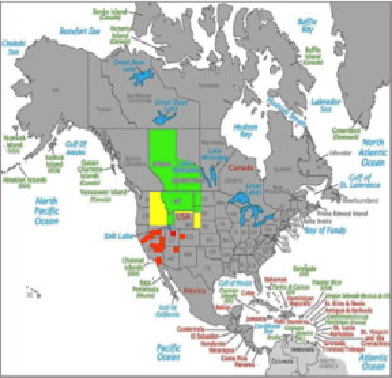
 Areas for which ESG has developed regional vegetation classification systems and management documents (wetlands, forests, shrublands and rangelands), as well as performed site-specific environmental assessment and planning work;
 Areas in which ESG has performed large-scale environmental surveys, as well as site-specific environmental assessment and planning work; and,
 Areas in which ESG has performed site-specific environmental assessment and planning work.